How to Clean and Store Your Sex Toys
Cleaning and storing sex toys properly isn’t glamorous, but it’s the part that keeps them safe to use. Get it wrong and you risk irritation or infection; get it right and it takes barely a minute. The rules aren’t complicated — they mostly come down to knowing your toy’s material and being consistent.
This guide covers how to clean the main materials, how to store toys so they last, and when it’s time to let one go.
Why It Matters
Sex toys come into contact with parts of the body where hygiene genuinely matters. Bacteria can linger on a toy between uses, and porous materials can trap it where cleaning can’t easily reach. Cleaning before and after use is the simple habit that prevents most problems.
Material decides how you clean. The single most important thing is knowing what your toy is made of, because non-porous and porous materials, and motorised versus non-motorised toys, need different handling.
Cleaning by Material
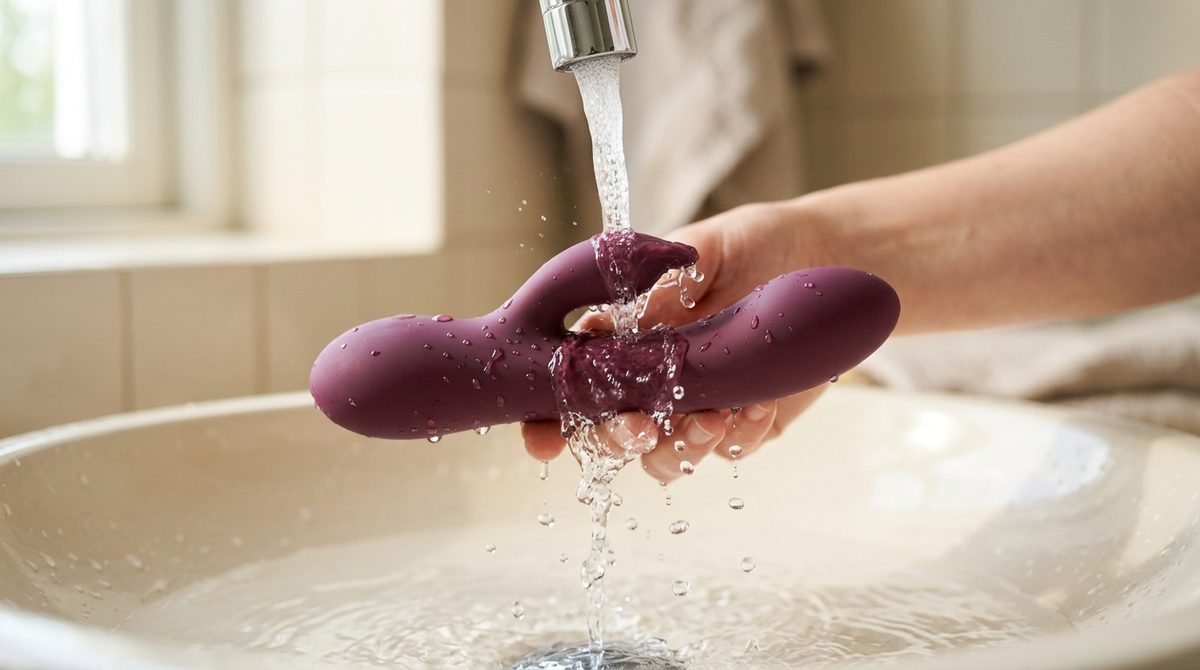
Body-safe silicone, glass and stainless steel are non-porous and the easiest to keep clean. Warm water and a mild, unscented soap will handle everyday cleaning. Some non-motorised, fully waterproof silicone toys can tolerate more thorough methods, but always follow the manufacturer’s instructions rather than assuming.
Porous materials — some cheaper toys use them — can’t be cleaned as completely, because bacteria sit in tiny pores. Using a condom over them helps, and they’re best replaced sooner. This is one more reason our guide to body-safe sex toys recommends non-porous materials from the start.
- Clean before and after every use.
- Use warm water and mild, fragrance-free soap; harsh cleaners can irritate you later.
- Dry thoroughly with a clean towel before storing — damp storage encourages bacteria.
Motorised and Electronic Toys
Never submerge a toy unless it’s labelled waterproof. Many vibrators are only splashproof around the controls. For these, wipe them down carefully rather than dunking them, taking care around charging ports and seams.
Follow the charging guidance too. Letting a rechargeable toy run flat for months can shorten its life; an occasional top-up during long spells of non-use keeps the battery healthier.
Storing Toys Safely
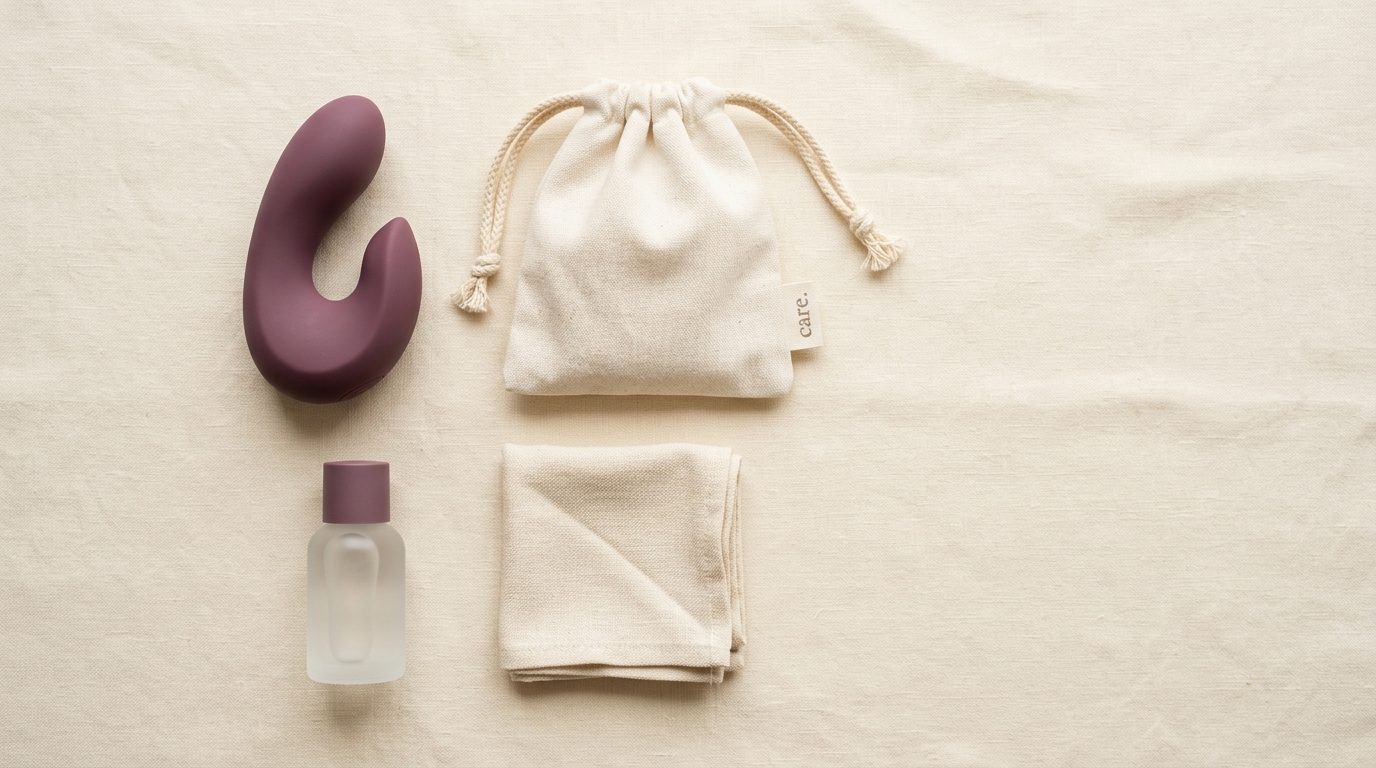
Store toys clean, dry and separate. Different materials — especially silicone — can react with each other if left touching for long periods, so keeping them apart protects the surfaces.
- A cloth bag, a lined box or individual pouches keep toys from touching and gathering dust.
- Keep them somewhere cool and dry, out of direct sunlight.
- Remove batteries from battery-operated toys during long storage to avoid leaks.
When to Replace a Toy
Retire a toy that’s damaged. Cracks, tears, a sticky or changed surface, or a persistent smell you can’t wash out all mean it’s time to replace it — damage creates places bacteria can hide that cleaning won’t reach. A well-made, body-safe toy that’s cared for can last for years, which is part of why buying quality once often beats buying cheap repeatedly.
Common Questions
How often should I clean my sex toys?
Before and after every use. It only takes a moment and it’s the simplest way to prevent irritation and infection. Storing them clean and dry keeps them ready between uses.
Can I use normal soap?
A mild, fragrance-free soap and warm water is fine for most non-porous toys. Avoid harsh or heavily scented cleaners, which can leave residue that irritates sensitive skin.
Can I put sex toys in boiling water or the dishwasher?
Only some non-motorised, non-porous toys tolerate very hot water, and never anything with a motor or battery. Always check the manufacturer’s instructions first rather than assuming.
How do I clean a vibrator that isn’t waterproof?
Wipe it down with a damp cloth and mild soap, keeping water away from the charging port and controls. Never submerge a toy unless it’s specifically labelled waterproof.
Why should I store toys separately?
Some materials, especially silicone, can react and degrade if left pressed against each other or against certain plastics for a long time. Separate pouches or a lined box prevent this.
When should I throw a toy away?
When it’s cracked, torn, sticky, discoloured or has a smell you can’t wash out. Damaged surfaces trap bacteria that cleaning can’t remove, so a damaged toy is worth replacing.
This guide is part of Wellnesty’s Sexual Wellness and Education series. Some links on Wellnesty are affiliate links, meaning we may earn a small commission if you buy through them, at no extra cost to you; it never changes what we recommend.