Sensory Date Night Ideas
Most date nights get squeezed into the gap between finishing the washing-up and falling asleep on the sofa. The telly goes on, phones come out, and the evening dissolves into the same low hum as every other night. You were technically together, but neither of you would call it a date.
A sensory date night is a small correction to that. Rather than planning something impressive, you plan something noticeable — an evening built around what you can feel, taste, hear and see. This guide offers practical ideas for slowing down and reconnecting at home, whatever stage your relationship is at, with no hard sell and nothing explicit required.
Why The Senses Help You Reconnect
When people describe drifting apart, they rarely mean they stopped loving each other. They mean they stopped paying attention. The senses are a shortcut back, because you can’t taste something properly or really listen to music while also scrolling.
Attention is the actual ingredient. A sensory evening works not because candles are magic but because setting the scene forces you both to slow down and be in the room. The props are just a way of protecting the attention.
Lower the stakes on purpose. This isn’t about performance or a big romantic reveal. It’s about noticing each other again, which is far easier when nobody feels they’re being marked.
Touch: The Easiest Place To Start
Touch doesn’t have to lead anywhere to be worth it. Non-goal-oriented touch — the kind with no agenda — is one of the fastest ways couples report feeling close again.
- Take turns giving a hand, foot or shoulder massage, five minutes each, no rushing
- Use a plain massage oil or body lotion so it feels considered rather than clinical
- Try the simple exercise of sitting back to back and just noticing each other breathe
Agree there’s no destination. Saying out loud that touch tonight isn’t a warm-up for anything removes the quiet pressure that makes people tense up. For anything you’re applying to skin, our lubricant guide covers what’s body-safe and worth keeping simple.

Taste: Make The Evening Edible
Sharing food slows an evening down naturally, especially when you make the eating itself the event rather than background to the television.
- A small tasting spread — a few cheeses, chocolate, or fruit — eaten slowly and described out loud
- A blind taste test: one of you picks three things, the other guesses with eyes closed
- Cooking one dish together, with the rule that it doesn’t matter how it turns out
The blindfolded element sounds gimmicky but works because removing sight sharpens everything else and, usefully, makes both of you laugh. Laughter and closeness tend to travel together.
Sound: Set The Evening To Music
Sound is the sense couples most often forget, yet it changes a room instantly. A deliberate soundtrack signals that tonight is different from a normal Tuesday.
Build the playlist together. Each of you adds songs that mean something — a track from when you first met, something you both loved on a trip. Playing it back becomes its own quiet conversation about your history.
Alternatively, drop the screens entirely and talk. If conversation has felt stuck lately, a set of prompt cards or our guide to talking to your partner about sex offers gentle openings that don’t demand a heavy sit-down.
Light: Change The Room, Change The Mood
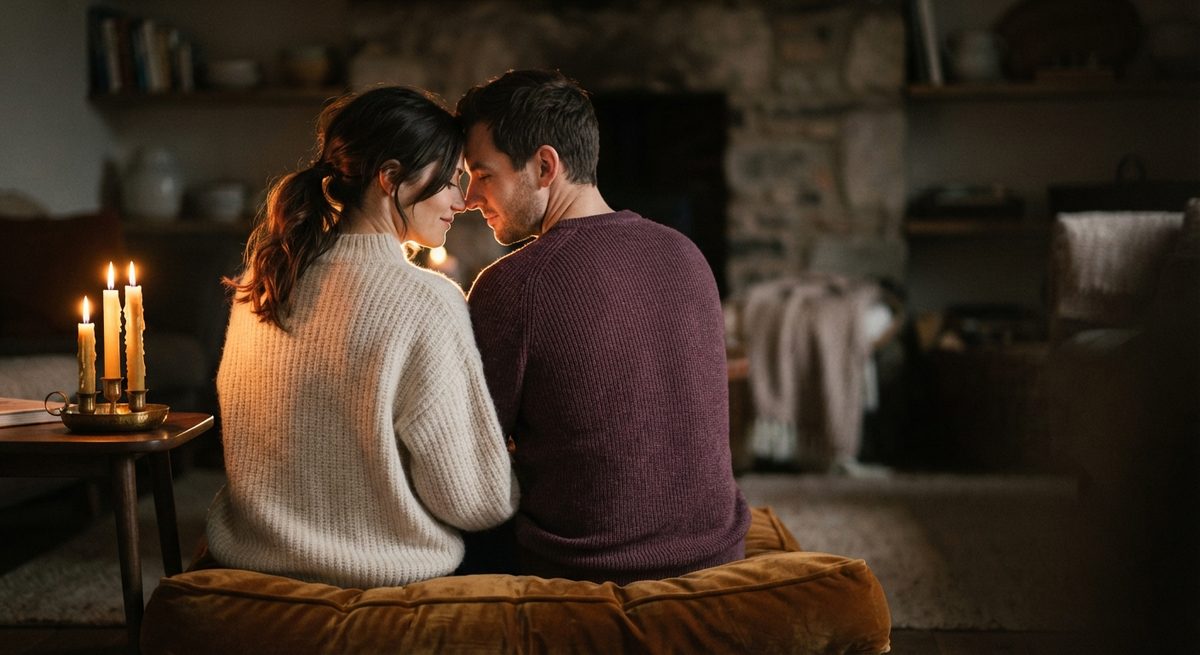
Lighting does more work than almost anything else for the least effort. Overhead lights keep an evening feeling like admin; softer light tells your nervous system it’s allowed to relax.
- Switch off the big light and use lamps, candles or fairy lights instead
- Let a fire, real or on screen, do the flickering for you
- Keep phones face-down and out of reach so no screen hijacks the room’s glow
One adjusted room beats a whole plan. If you only change one thing tonight, change the light. It resets the atmosphere in seconds and costs nothing.
Putting An Evening Together
You don’t need all four senses in one night. Pick two, keep it loose, and let the evening breathe rather than running it like a schedule.
Protect the time first. Agree a start, silence notifications, and treat the hour as booked. The single biggest threat to a sensory date night isn’t a lack of ideas — it’s the phone buzzing halfway through. For a seasonal version of the same idea, our guide to winter intimacy rituals builds these habits into the colder months.
Common Questions
What if we feel a bit silly doing this?
That’s normal and usually passes within a few minutes. Naming it — “this feels a bit daft, let’s do it anyway” — tends to break the tension faster than pretending it doesn’t.
Do sensory date nights have to lead to sex?
No. They’re about attention and closeness, and they work best with no fixed destination. Anything else that follows is a bonus, not the point.
We’re exhausted after work — is this still worth it?
Yes, and tiredness is an argument for the low-key versions. Ten minutes of unhurried touch or a shared taste spread asks very little and still resets the mood.
Can new couples do this too, or is it just for long-term partners?
Both. New couples use it to slow down and pay attention; long-term couples use it to get that attention back. The ideas scale to any stage.
What if one of us is more into it than the other?
Start with whichever sense the reluctant partner finds easiest — often taste or sound — and keep the first attempt short. Enthusiasm usually grows once it feels low-pressure.
How often should we do it?
There’s no correct frequency. A short, genuine evening once a fortnight beats an elaborate one you keep postponing.
This guide is part of Wellnesty’s Sexual Wellness and Education series. Some links on our site are affiliate links, which help fund our research at no extra cost to you and never shape the advice we give.